

The Ultimate Travel Guide to China
Travelling to China is probably one of the greatest challenges a traveller can face. A country the size of a continent, where you can hardly communicate, where you can’t use the same apps and which has a culture that is totally different from any other country. After having travelled through it for 3 weeks, we would like to try to help you by bringing you this travel guide to China, which we hope will help you to enjoy this great country to the fullest.
We will try to give you as much detail as possible about each section, but we would like you to ask us any questions you may have on social media or in the comments, as we know there can be a lot of doubts and we can surely help you :).
That said, let’s go with our travel guide to China!
🌏 You might also be interested in…
Check out our other posts about China to complement the information you find in this article:
Travel Insurance, travel guide to China

We want to start our travel guide to China by commenting on this point because we think it is the most important one. And no, we are not telling you this so that you can use our link (hey, if you want, you can help us a lot :)), it is because it is absolutely necessary. According to sources such as chinaexpat.com or expatfocus.com, hospitalisation costs in China are very high. For example, for a simple hospitalisation, it can be as high as 450-500€ per day.
In addition, when you travel to a country so different from your own and depending on the areas you visit, you will find that aspects such as cooking hygiene or the type of water they drink is not the same as what you are used to. We have to say that we were very happy with this aspect, we expected it to be worse, but better safe than sorry, right? Finally, there are regions of China where there is a big pollution problem, which can affect respiratory issues or tuberculosis, malaria and malaria in areas such as Yunnan or Hainan Island.
Therefore, we would recommend you to take a strong travel insurance for a trip to China. For us, the best travel insurance and the one that always accompanies us is IATI Seguros. In this case, we would take out the IATI Estrella cover, which covers hospital expenses up to 5,000,000 €, so you can be VERY relaxed. We leave you our link with which you get a 5% discount and you help us a lot to continue generating content.
Visa, travel guide to China

We will explain our experience from Spain, but for these issues always consult the embassy of Foreign Affairs of your country, it is the best way to see what agreements there are between countries.
Until December 2025 (at the moment, it has just been renewed as it expired in November 2024), Spanish have 15 days free to visit China without the need for a visa. We wanted to visit China for 1 month, so our first intention was to get a visa. China had until May 2024 two embassies in Spain, one in Barcelona and one in Madrid. It turned out that just when we went to do it, the one in Barcelona had just closed, and the only way to do it was in Madrid. As we didn’t have time to go and didn’t feel like sending the passport by post, we decided to look for alternatives.
The most typical and effective alternative is to leave the country after 15 days and re-enter. To do this, you can use different strategies:
- The first is to take a plane to a nearby country. If you are in Beijing or Shanghai, flights to Korea or Japan are very cheap, almost cheaper than getting a visa.
The second, and best in our opinion, is to go to Hong Kong. This ends your stay in China and, when you re-enter, your pass has been renewed for another 15 days. - If, on the other hand, you want to get a visa, you will have to go to the Chinese embassy in your country and pay a fee of around 100-130€ for the visa. Check in your country which is the best way to do it.
If, on the other hand, you want to get a visa, you will have to go to the Chinese embassy in your country and pay a visa fee of around €100-130. Check with your country for the best way to do this.
Best period to visit China

We wanted to cover this point in this travel guide to China as we believe it is the main question people ask when visiting a country.
There are two points to consider when selecting the best time, the amount of tourism and the weather. Let’s start with the first one.
Festivities in China
The main tourists in China are Chinese. And this is very important. They are a country of 1425 million people and they love to visit their country, so you can imagine what happens during the main festivities, can’t you? Chinese festivities are to be avoided at all costs, as it will turn your trip into an ordeal (really, we have seen pictures they showed us and it makes no sense, you can’t move). So mainly, we don’t recommend going to China for anything in the world:
- Chinese New Year: The date varies depending on the year between January and February. Check which year it falls in the year you want to go.
- Chinese National Day: It is celebrated on October 1st and is part of the Golden Week, a week when the whole country has a holiday. It is probably the worst time, as there is a lot of movement in all the cities to the main tourist sites.
Weather in China
In terms of time, being such a large country, it is very difficult to generalise. This is roughly how it could behave:
- South China (HK, Guangzhou, Shenzhen…): The rainy season runs from May to September normally, with peaks in June / July. In this region the temperature is fairly constant all year round.
- Eastern China (Shanghai, Hangzhou…): Rains between May and July.
- North China (Beijing, Xi’an…): July and August is the peak of rainfall. It has a similar climate to Spain, with similar or slightly colder temperatures.
- Western China: It is not a very rainy region, if it rains it is in Tibet area during July/August.
Then, which is the best period?
After talking to some of the people we met in China (the few who spoke English) they told us that the best time is the time we were travelling, November. It doesn’t coincide with any holidays, the weather is pleasant and there aren’t many tourists visiting things. This is the one we would recommend and the one the Chinese also recommend.
Vaccines, travel guide to China
Currently, at the time of writing this travel guide to China, for Spanish travellers, there are no mandatory vaccinations according to the Spanish Ministry of Foreign Affairs, but always check the website for the latest updates.
Additionally, it is always advisable to go to an international vaccination centre before travelling to make sure that there is nothing we are missing and to get the necessary vaccinations to be able to travel.
Security in China
Yes, China is definitely a very safe country to travel in. Let’s not forget that they have a communist system controlling the country, which means that any crime is severely punished. We don’t know if it’s because of that, but they have a very low crime rate. We travelled all over the country and never felt unsafe. In addition, Chinese culture, where respect for the authorities and for others are fundamental pillars for living in society.
To give you an example, in the big cities you have luggage control done by 3-4 people in all the metro stations. And there are hundreds of them…
In this travel guide to China, we want you to know that it is a country that allows you to travel alone and calmly, and where we felt that tourists were well received, even without being able to talk to them.
Transport
Train
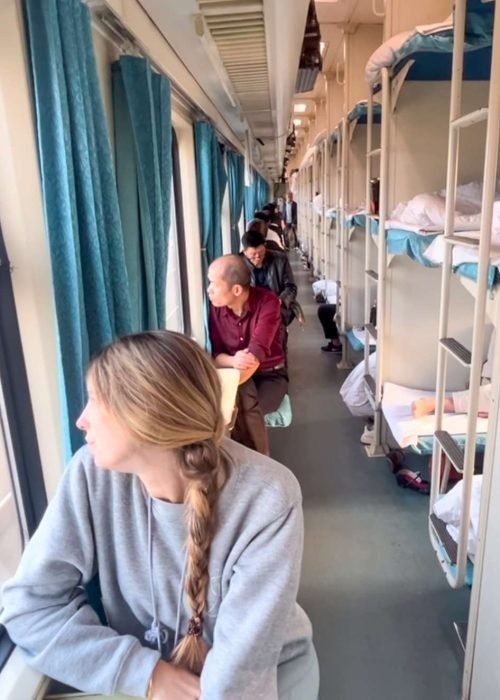

The ultimate form of transport in China is the train. After travelling all over the country this way, we think it is by far the best way as it is comfortable and you can get to almost anywhere in the world. It is one of the best connected countries in the world, although we didn’t find it to be cheap.
As we said, we travelled almost always by train. We always took the trains with Trip.com, which, in our experience, is the app that works best in the country, both for hotel and train reservations. Also, in most cases it allows you to cancel with a full refund, so it was perfect for us as we kept changing our plans.
The experience in the stations is quite good, as you go with your ticket indicating your seat number and train number, and these numbers are displayed on the screens in the stations, so it is difficult to get lost. They are like clockwork, they are rarely late, so try to be on time.
The last thing we want to talk about in this section of our travel guide to China is the night trains. The Chinese use them quite a lot to get around such a huge country. They are the cheapest, but also the least new. Normally, they are compartments of 6 beds in bunks of 3, and quite narrow. The good thing is that in our experience they were kind to us, as not many tourists use this form of transport.
Metro in the cities
We took the metro in Beijing, Shanghai and Chongqing and the experience was brutal in all three cases. It runs like clockwork and you can get anywhere in such huge cities in no time at all.
We’ll go into more detail later, but the best app for getting around the country by metro is MetroMan.
Bus
We took some at specific times during the trip, but I would only take it if you have no other option. Normally, these resources are much more used by locals, so it will be a bit more complex to get around. Still, we didn’t have too much trouble. Normally, you buy the ticket at the station directly or on the bus from the driver.
Taxis
Didi is your ally. I’ll go into more detail in the apps section, but it goes like a shot and it’s not ultra-expensive, although judging by the metro and the tremendous traffic in some Chinese cities, there’s not much reason to use it.
Accomodation
In our eagerness to try to keep things organised, we had already booked our hotels in Barcelona through our favourite booking platform, Booking.com.
But, in the middle of the trip, we realized that Trip.com is cheaper and has much more to offer in the country. In the end, the country is not very open to apps they haven’t created themselves, so they prefer Asian apps like Trip or Agoda (another good option).
Really, try to compare prices and offers and you’ll see. We would always recommend Booking to book hotels and we always do it there, but in this case it is not the best option.
As for the quality / price of the hotels, we managed to keep an average of 20€/person/night, which seems more than reasonable, considering that we stayed in hotels that were not bad at all and always in private rooms with bathroom. Below you will find the hotels we stayed at in each destination and our quality/price rating.
Finally, we would not recommend booking directly on the spot, as the language barrier will make it quite difficult, as most hotels do not speak English. You can do it with Translator, but we preferred to take it days before.
Gastronomy
How complicated this section of the travel guide to China is! The country is like a continent and each region is very different in terms of customs and food. The food is very varied and tasty, but there is also a lot of food that we are not used to, so there may be local places where it is difficult to eat.
There is not much choice of Western food, so you will have to adapt to it.
Also, 90% of the menus will be in Chinese, especially outside the big cities, so your best friend will be Google Translator (Search with camera option).
Food per area
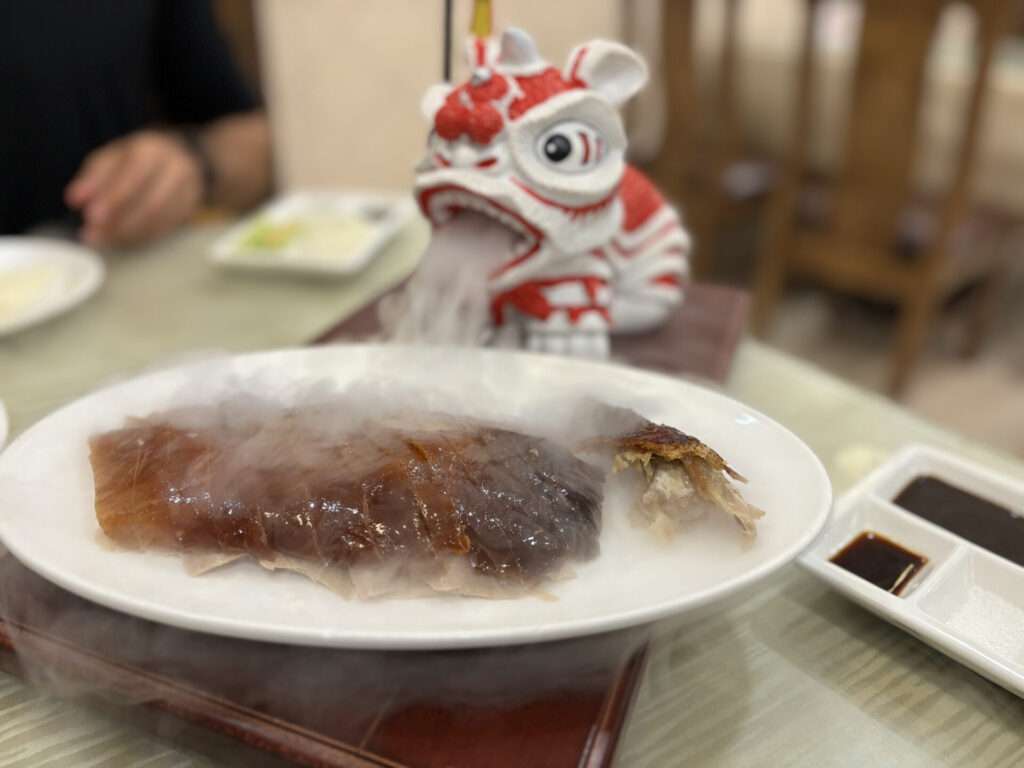
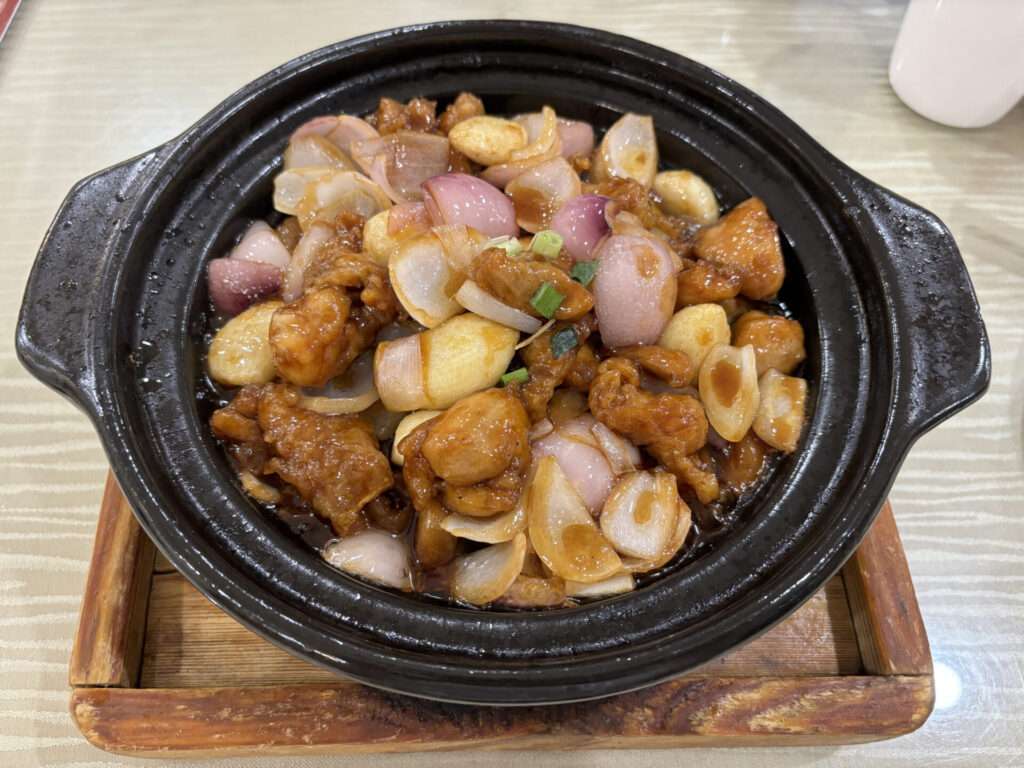
Some of our favourite meals by area are:
- Beijing: Peking duck, crispy bread stuffed with beef or pork.
- Shanghai: Xianlonbaos.
- Huangshan: Stinky tofu (we didn’t love it but it’s cool to try it).
- Xingping and Yangshuo (Guilin): rice on bamboo canes
- Hong Kong: Cantonese dim sum
- Zhangjiajie: meat in clay pots
- Chongqing: Chongqing hotpot and Chongqing noodles
Options for veggies / vegans
For vegetarians and vegans, it is easy to find options, as they have a super varied gastronomy and use a lot of soya, tofu, vegetables and eggs (for vegetarians), so you can easily find options.
Street food

We were very pleasantly surprised by the quantity, quality and hygiene of most of the street places we went to, whether in big cities like the hutongs in Beijing or Yuyuan Market in Shanghai, or in smaller regions like the Wulingyuan night market in Zhangjiajie.
Presupuesto para viajar a China
We will detail more in a post that we will publish soon (cost per city, concepts, detail of transport prices…), but our expenses during 21 days were:
- Food: We ate in local places, with a low-medium budget and without drinking alcohol (which is often the most expensive) and our cost for 21 days was 660€ for two people, which makes an average of 15€ per day per person.
- Accommodation: We always stayed in private rooms with en-suite bathrooms, in simple hotels with no luxuries. The total cost of accommodation was €872, an average of €20 per person per night.
- Transport: we mostly took trains and the metro, although some taxis and buses (few). We took many long trains which were somewhat expensive. The total for 21 days is €838, about €19 pp per day.
- Activities: We did not do any tours, this cost represents the entrance fee to places and visits. We came out at a total of €350, about €9 per person per day.
This comes to a total of €1360 per person excluding flight.
Culture Shock, travel guide to China

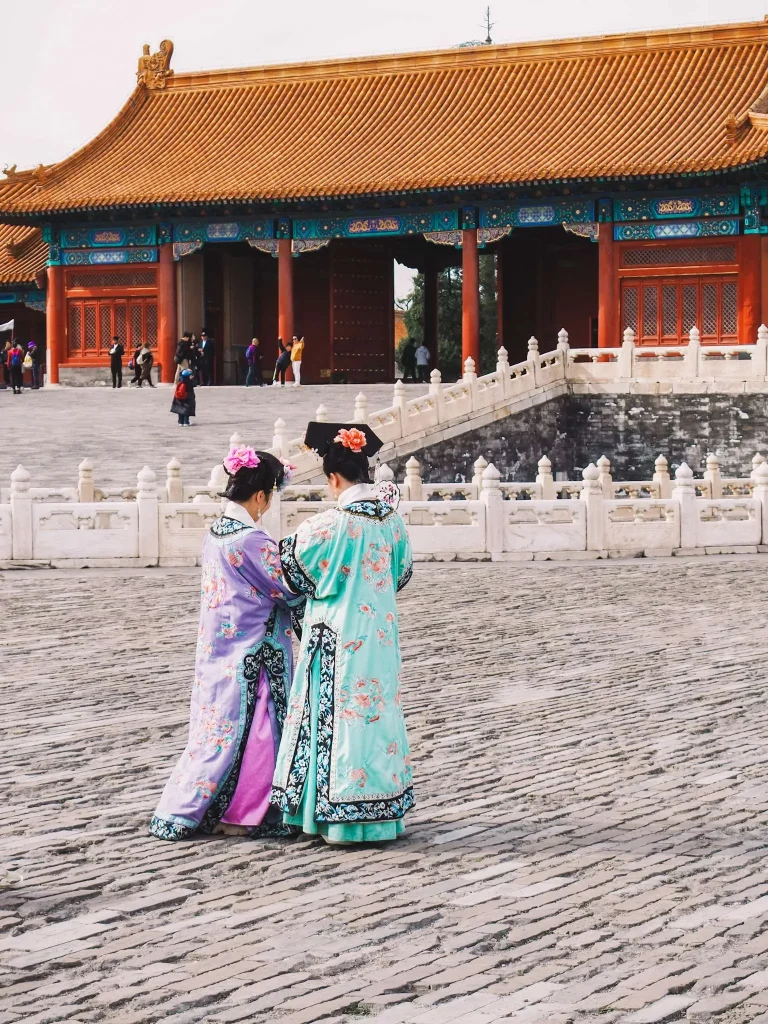
Here we come to our favourite section of the travel guide to China. For us, it’s one of the coolest things about travelling, the culture shock. It is true that when you are living it, there are situations that can push you to the limit, but that is when you grow as a person and a traveller.
- The first and most important thing is the language. It is very difficult to communicate. And it’s a shame, because that means you can’t get to know them well and have a deep cultural exchange. That’s one of the things I liked the least, not being able to get to know the people I came across. For basic communication you can use the translator, they are quite used to it.
- As a second point, open your mind about things that we would consider ‘dirty’, like spitting. They do it all the time and it’s their culture, they don’t see it as something out of place and you have to respect that. But be prepared, because we thought it was an urban legend and no, it is constant :D.
- Then you will see that there is an extreme control over everything. We won’t judge the way they live, but it’s a reality. Constant passport controls, cameras everywhere, everything recorded, controls at every metro station….
- Their way of thinking is much more traditional. Before 30 married and with children, otherwise you are frowned upon, you have to work and not go astray, extreme competitiveness from a young age…
- I’ve already mentioned it above, but gastronomically, they eat things that are strange to us and you wouldn’t know what they are.
- Being such a populated society, you will see that they have a very different concept of space than us. In crowded places, they’ll push you around, they’ll sneak up on you and they won’t respect these kind of polite standards that we have. It’s hard (Chris was the first one to get pissed off every time I passed by) but try to smile and put it in perspective, they don’t mean it in a bad way, it’s their way of life.
Tips in China
Tipping in China is unusual and can even be frowned upon, as they don’t understand why you have to add an extra cost to a service where you already pay for the value of the service. Therefore, it is not a country where you have to consider this concept in your budget.
Currency, Travel Guide to China
The Chinese currency is the Yuan (CYN). You can check the exchange rate here.
Honestly, we didn’t use a banknote in 21 days all over the country, not even in a remote fishing village in the middle of the mountains where a man pulled a QR on a piece of paper for us to pay him. So with Alipay and Wechat you go everywhere and you won’t need to withdraw money.
Mobile connexion and VPN

As you may know, China has blocked all apps from outside the country. You can’t use Instagram, Tiktok or Whatsapp…
In our travel guide to China, we are going to recommend what we did, although it is not the cheapest option.
On our trip, we opted to take a Holafly card for every day, and Andrea used it. Why do we think it is the best option?
- When you arrive in the country you already have a connection. Key to get out of the airport by Didi or transport. If you go to a taxi driver, you will always be overcharged.
- It has a VPN included that works perfectly. Yes, it is key because it allows you to use the apps at home without any problem.
- It has a very good connection. The truth is that it went like a shot.
- Imagine the communication in a mobile phone shop… We didn’t want to go through it.
Chris bought a card with another company he found on the internet, but for a bit more money we think it’s better to use Holafly. Oh, and if you book through our link, you get a 5% discount on your purchase!
VPN
We have the Revolut Premium plan and it included one of the best VPNs on the market (which we use in other countries and it works like a shot), NordVPN. It didn’t work for us and there was no way. After researching and trying 2-3, the one that worked for us and has a luxury price is LetsVPN (4.5 per month). So after our experience, in this travel guide to China we recommend you to use this one. In case it doesn’t work for you, let us know so we can correct the post.
Must-have apps, travel guide to China






OK, here comes the key section of the trip and the one that will save you hundreds of headaches, which apps you will need. In this travel guide to China we are not going to bombard you with a thousand Chinese apps, I will simply tell you the ones we use because after 21 days on our own in the country, we are alive and writing these lines, so we must have done something right :D
We will leave you a summary of the apps we used and what they are for, as we will soon bring you a complete post about apps in China with video tutorials.
| App Name | Category | Utility | Download Link |
|---|---|---|---|
| Trip.com | Travel | The best platform for hotels and trains in Asia. Find the best hotel prices and enjoy excellent customer service. | Android | iOS |
| MetroMan | Transport | App for navigating metro systems. Shows quick routes and nearby stops. | Android | iOS |
| Social/Payments | The essential app in China for communication, payments, and marketplace access. | Android | iOS | |
| Alipay | Payments | The best payment app in China. Essential for cashless payments. | Android | iOS |
| Baidu Maps | Maps | Local alternative to Google Maps in China. | Android | iOS |
| Didi | Transport | Taxi and ride-sharing services. | Android | iOS |
| LetsVPN | Connectivity | Unrestricted internet access. | Android | iOS |
| Revolut | Finance | Expense management and currency exchange. | Android | iOS |
| Google Translate | Translation | Translate text and voice in real-time. | Android | iOS |
I hope you find this travel guide to China useful, at least to get your bearings and be clear about some key things before you leave.
If you miss anything or want us to expand any section, let us know in comments or rrss, we are happy to receive feedback to improve.
¿Te ha parecido útil este post?
¡Haz clic en una estrella para puntuarlo!
Promedio de puntuación 0 / 5. Recuento de votos: 0
Hasta ahora, ¡no hay votos!. Sé el primero en puntuar este contenido.
¡Siento que este contenido no te haya sido útil!
¡Déjame mejorar este contenido!
Dime, ¿cómo puedo mejorar este contenido?


