
The Ultimate Guide to Our Beijing Must-Sees


Beijing, the Shoudu (capital) of Asia’s largest country and one of the world powers, China, has many incredible places to visit. We were able to enjoy 4 days in the city and we can tell you that it is a city that needs to be planned, as it is large and complex. That’s why we want to bring you our Beijing must-sees.
Before we start, we would like to give you some preliminary advice:
That said, let’s get started with our Beijing must-sees!
Discover our other China posts, which will help you to complement the information you find in this post:
Obviously, the Great Wall of China has to be at the top of the list, being one of the 7 wonders of the modern world, one of the most visited places in the world and therefore one of Beijing must-sees.
The Great Wall was originally built in the 7th century BC, but its current structure and size is due to the Ming Dynasty, which between 1368 and 1644, linked the wall along its current 21000km, to protect against invasions, especially Mongol invasions. It also became a route for trade and the transport of goods. However, it was overcome several times in history, for example by Genghis Khan’s army. It was recognised as a World Heritage Site in 1987.
Beijing is a perfect place to visit as it has access to 4 main sightseeing sites. You can find out more detail on how to do each option with our post: How to visit the Great Wall from Beijing. The options are:
To go to the Great Wall, you have the options of booking private transport, going by public transport and booking a tour. Details of each option are in our other post.
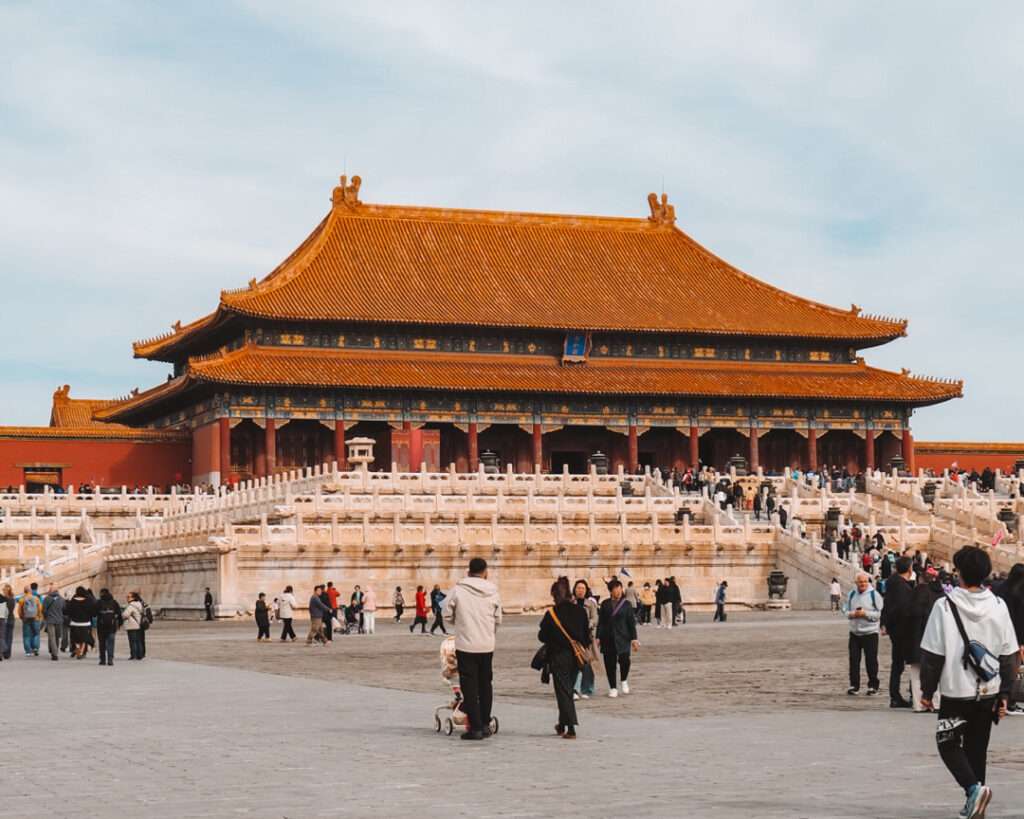
On a historical level, surely the most relevant place in the Chinese capital.
The Forbidden City was an imperial palace inaugurated by the Ming dynasty and ending with the Qing dynasty (1420-1912). This large complex is composed of 980 buildings and approximately 9000 rooms. The name is given because this complex was totally closed to the general public, allowing access only to the dynasties of the time and royal workers.
One of the most famous moments of this place is the story of the Last Emperor, Puyi, who came to power at the age of 3 in 1908. After the revolution in 1911, the dynasties were ended and Puyi was no longer the ruler. However, he lived in the Forbidden City until 1924, when he was expelled. This story is incredibly well told in the film The Last Emperor.
As you can see, it is one of the Beijing must-sees, due to its historical relevance and impressive size.
To visit it, there are two options:
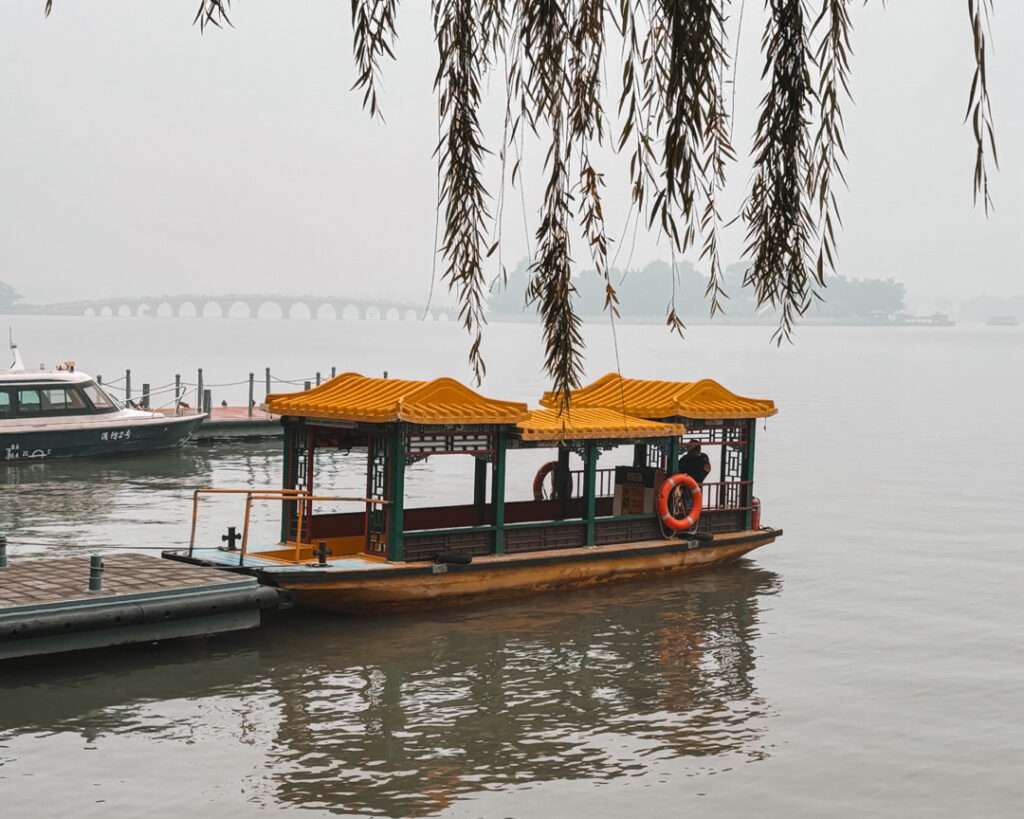
One of our favourites and, obviously, one of the Beijing must-sees, is the Summer Palace.
This place, built in 1750 by the Qing dynasty, served as a summer retreat. For this purpose, it was set up around the huge Kunming Lake, which lowered the high temperatures that could be reached in the Forbidden City. As a detail, it was almost completely destroyed in 1860 and restored by the empress dowager Cixi.
Our recommendation in the Summer Palace is to walk around aimlessly and discover surprising corners. However, if you want to go for the long haul or if you are short of time, the must-see sights are:
To buy tickets:
The visit can easily take a whole morning or afternoon. If you go quickly, don’t expect less than 2-3 hours.
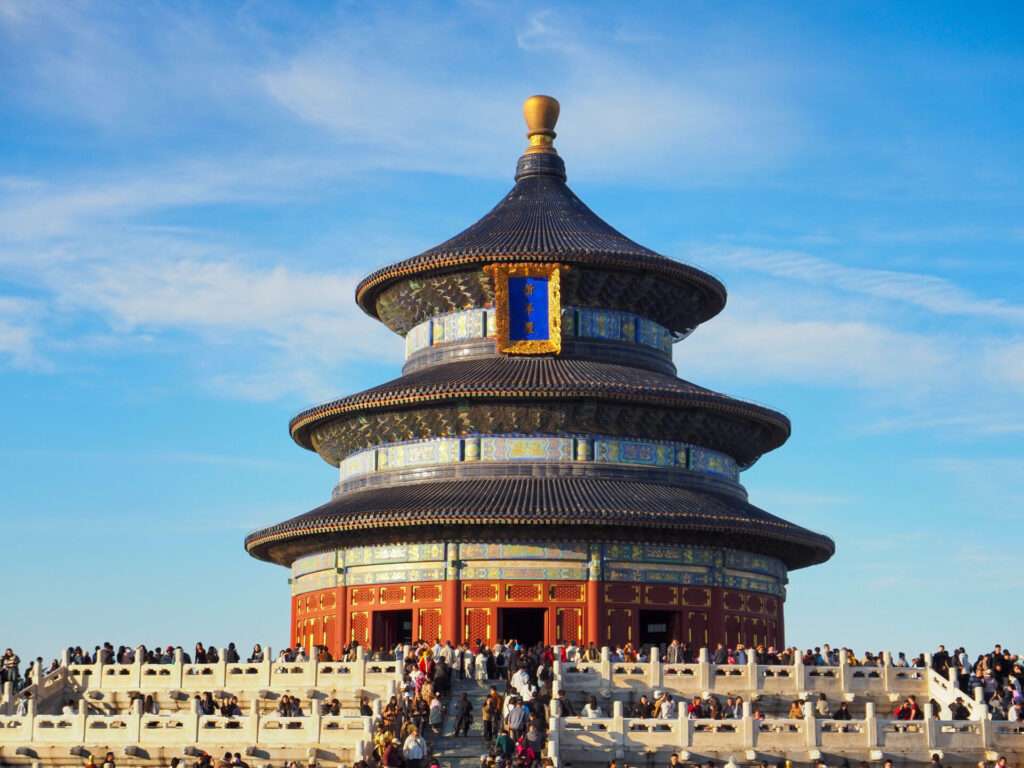
For us, it is the most beautiful place in the city and one of the great Beijing must-sees. And yet it was the most crowded when we visited it.
The Temple of Heaven, built in 1420, was the place where the Ming and Qing dynasty performed rituals and sacrifices to ask for things, such as good harvests. The design and colours represent the belief in the heaven-earth connection.
The site is located within a large park, which is very interesting to stroll around and see the Chinese park life, a hallmark of the Chinese people.
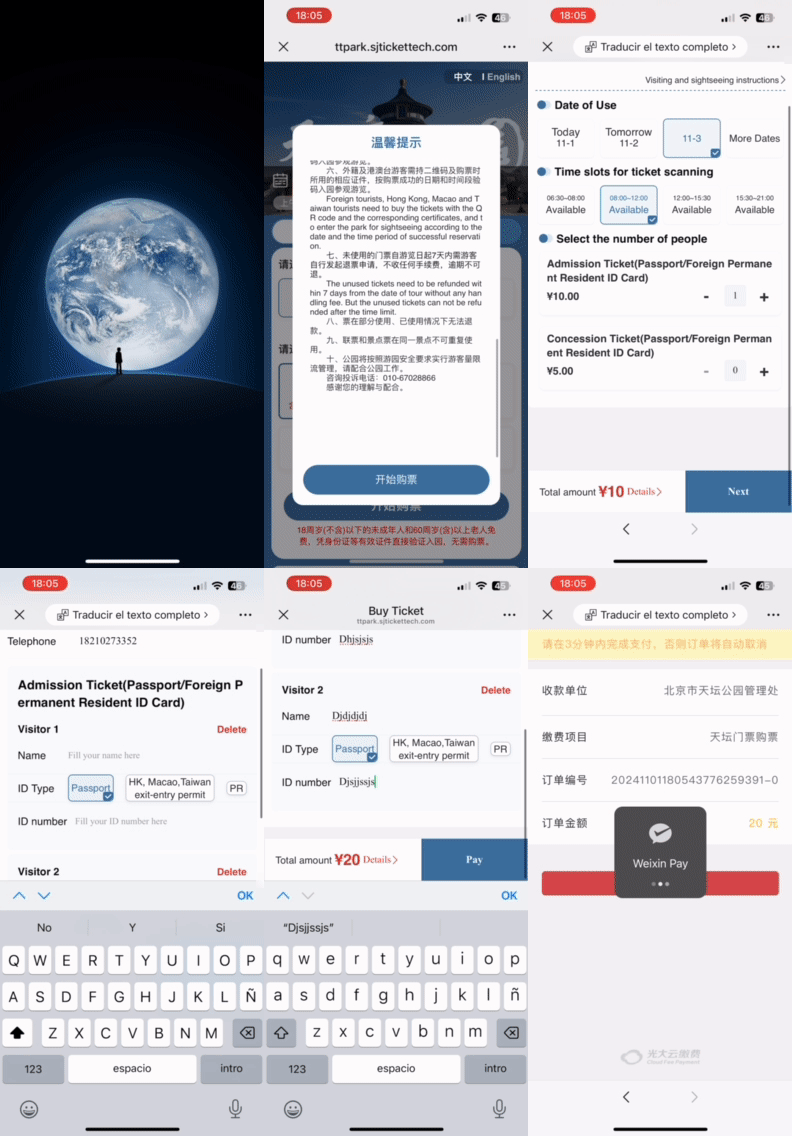
To gain access to the site, you will need to get tickets online. This can be done by accessing the Wechat app. The summary process is as follows:
1. Search in WeChat 天坛公园官方购票平台.
2. Follow the steps in the attached video.
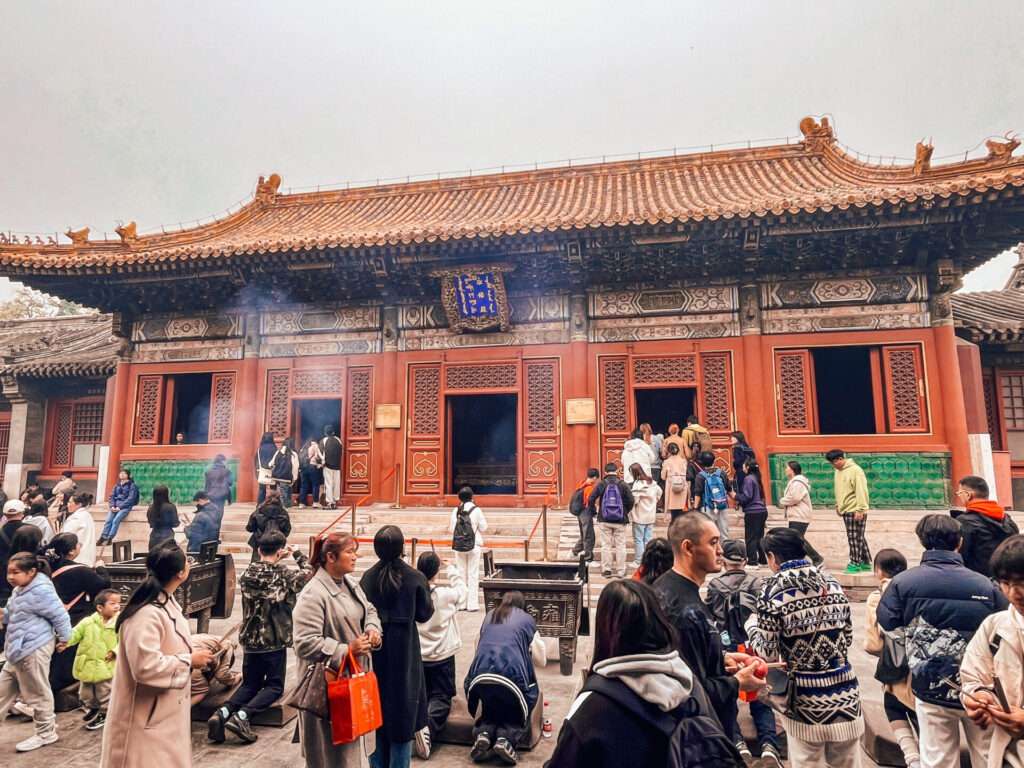
This temple is one of the most important places for Buddhists (outside Tibet). That is why it is one of the Beijing must-sees if you want to know more about this religion.
It was converted into a temple in 1744 as it was originally a residence of the Qing dynasty. The highlight is the large figure of Maitreya.
The highlight is the incense ritual, where three incenses are burnt and three bows are made before entering, to purify and let go of bad thoughts, to connect with the spiritual world and as a symbol of devotion to the Buddha.
The visit to the Temple of the Lamas, like almost everything else in the city, must be booked through an official app in Chinese, through providers such as Getyourguide or at the entrance at the ticket office.
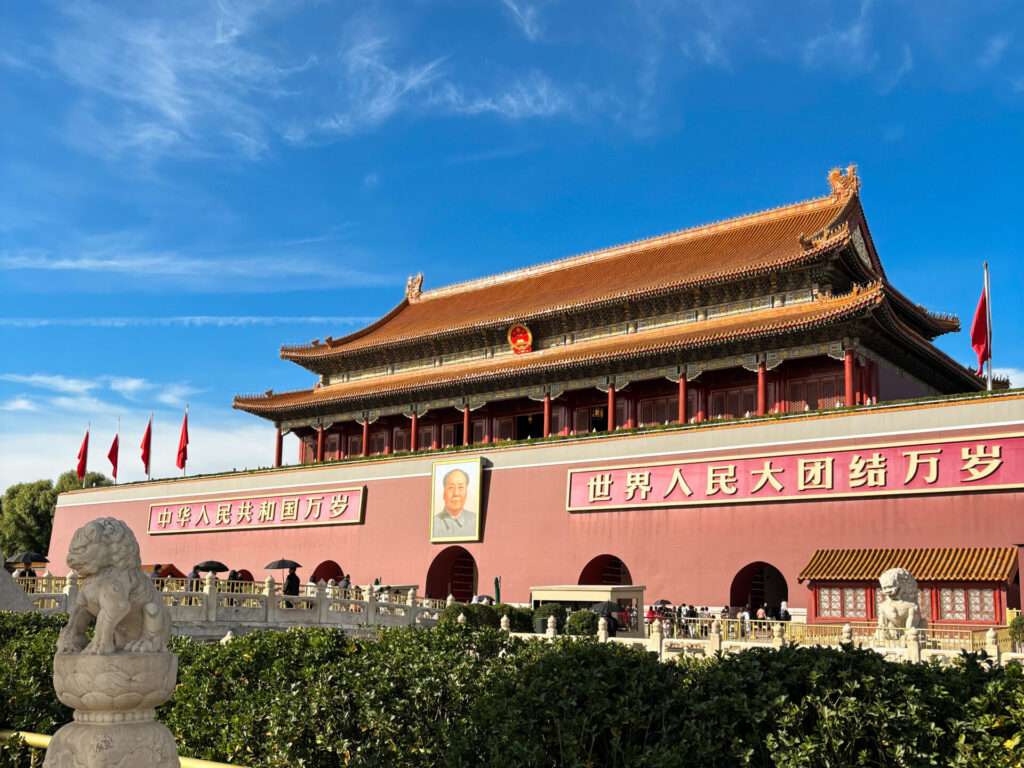
For us, the most iconic place in the city and another of Beijing must-sees.
This square is one of the largest squares in the world (440000 square metres) and also one of the most historically significant.
It was built in 1417 and enlarged in the 20th century. Nowadays, it is a sample of the power of the Chinese country. Some of the most relevant events that have occurred are:
Today, the square’s highlights include:
To enter, you can do it for free but you have to book a ticket through the app. For more details on how to do this, visit our post How to visit Tiananmen Square.
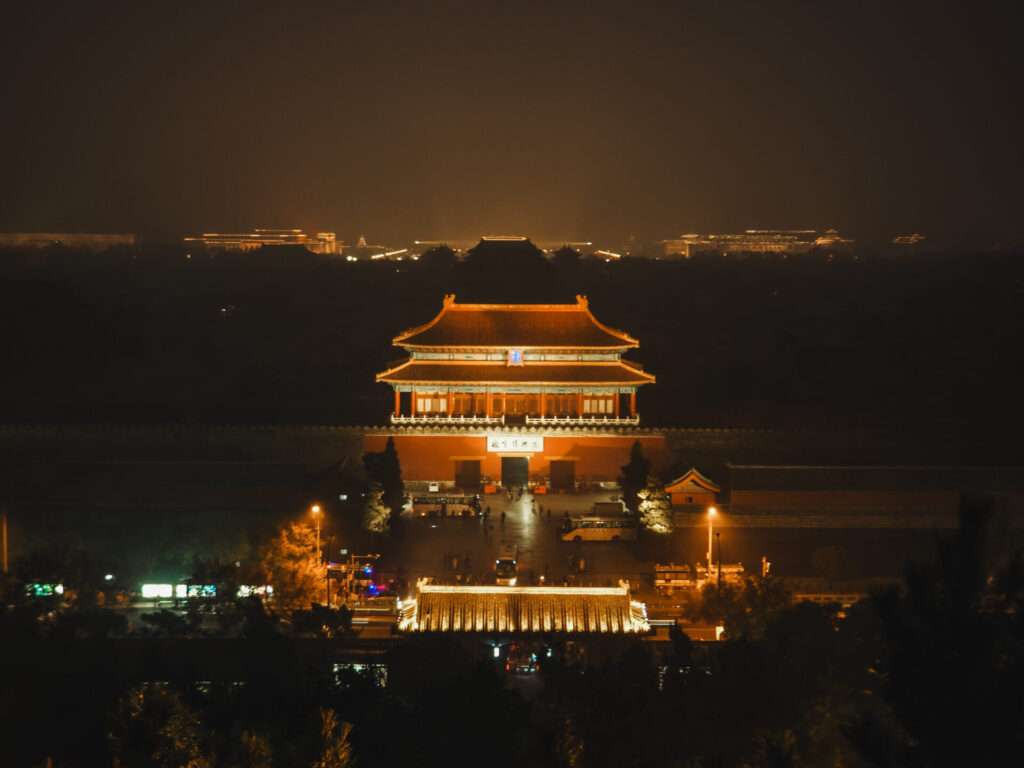
We are lovers of viewpoints, so we are going to recommend the best one we saw. It is in the famous Jingshan Park, located just in front of the north gate of the Forbidden City.
It is a viewpoint from which you can admire the entire Forbidden City and views of the whole city.
We visited it at night, but I think it must be more spectacular during the day since you will see the Forbidden City in all its splendour, at night only the main gate is illuminated. However, nothing is comfortable in China, so during the day it is bound to be more crowded.
You can get tickets at the entrance, they cost 2 CNY and the opening hours are from April to October from 6am to 9pm and the rest from 6am to 8pm.
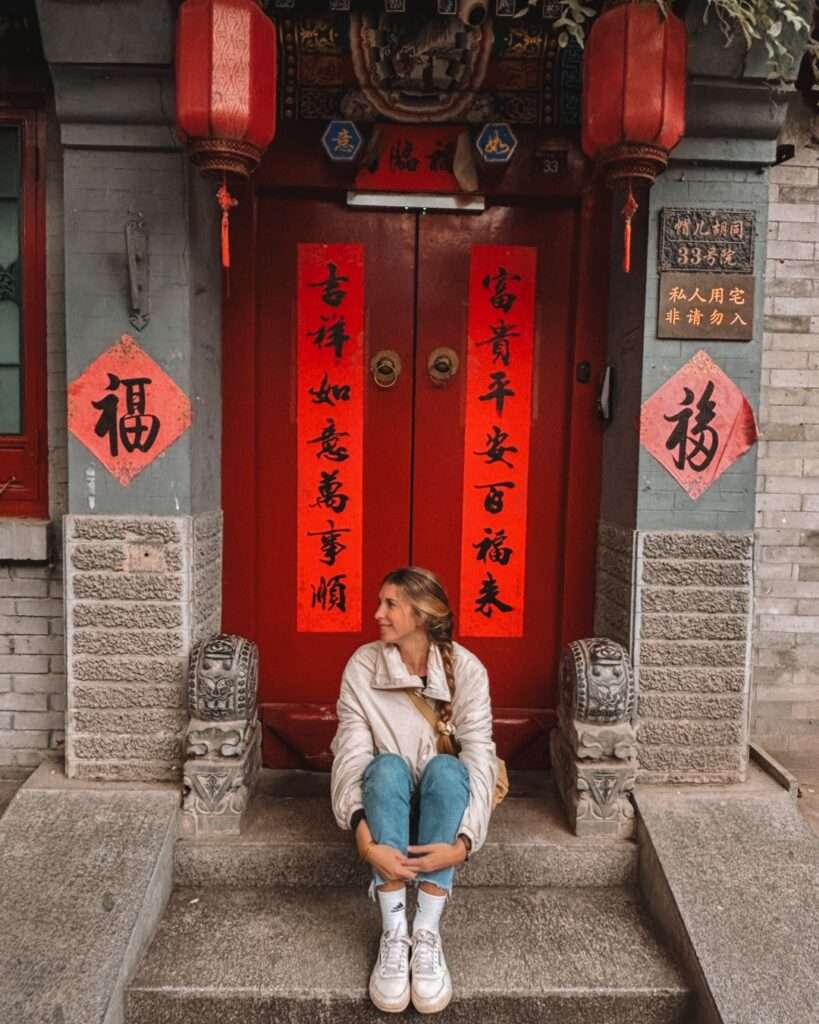
Everyone talks about the hutongs when they go to Beijing. But do we know what they really are?
Hutongs emerged 700 years ago during the Yuan dynasty and expanded during the Ming and Qing dynasties. They are narrow alleys of low houses, connecting neighborhoods formed by siheyuan or community courtyards. They function as small communities of neighbors and where a lot of living is done in company. Historically, they were not only places of residence but also places to trade (a bit like today).
Many hutongs have disappeared due to the modernization of the city, but Beijing still maintains super authentic areas where people continue to live this lifestyle.
For us, after walking through several, we recommend you to get lost in the streets and watch the people. Don’t just go to the main streets where all the stores are, as that is not the essence of the hutong. We recommend you:
One of our Beijing must-sees is undoubtedly going to a park and observing Chinese society and its customs. We believe that nowhere did we see so many curious and shocking things as in the parks.
For proximity, we chose the Ritan Park and we would highly recommend it. It is a park oriented to sports, with many ways to do it in public, such as climbing wall, badminton, public gym, running, taichi or dancing. If you go during the day, you will see the park full of elderly people doing sports, a fact that reflects very well the philosophy of the elderly in this country.
If you can, we encourage you to do sports in a park and feel like a Pekingese. You can try the popular Jianzhi game, which consists of not dropping a feather by hitting it with your legs (you will see lots of people doing it). We opted for running 🙂
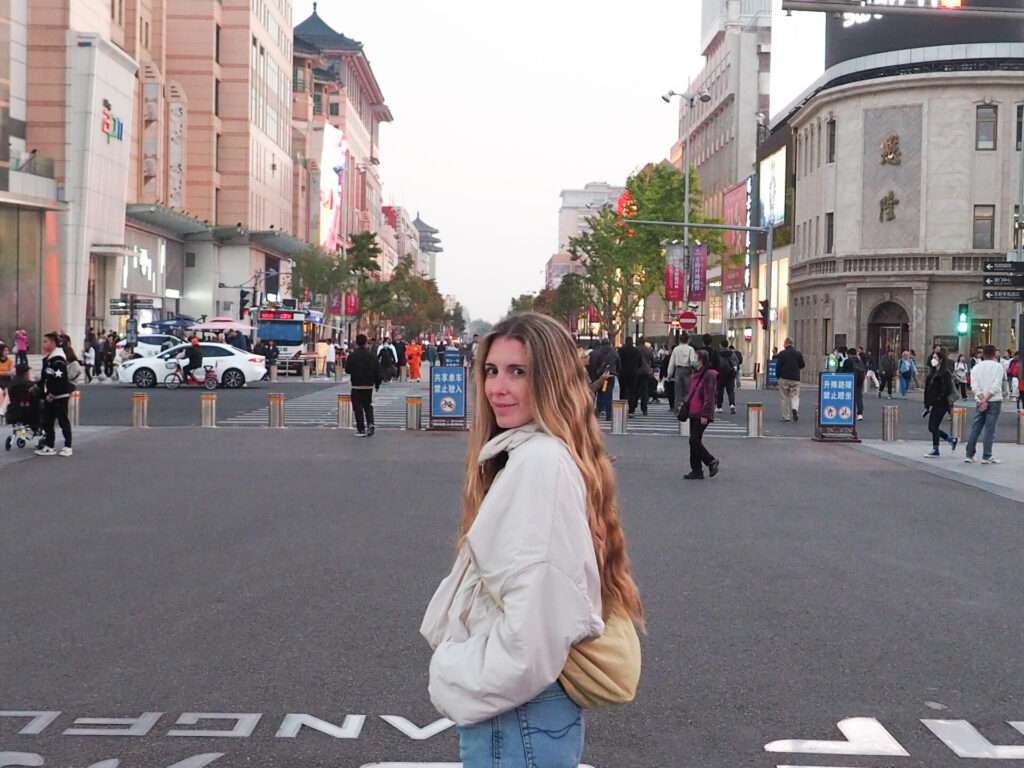
If there is one street we would recommend to see the modernization and size of Beijing, it is Wangfujing Street.
Historically, it began to be one of the main streets of the city with the Ming dynasty in the 15th century, when a well was built to supply the palaces and aristocratic residences. Later, with the Qing dynasty it became a trading area and this has continued to the present day.
This street, located in the center of the city, has all the major stores and brands, making it an ideal place for shopping. In addition, there are numerous shops and places to eat, which makes it even more special to go for an afternoon or dinner.
We recommend you to go in the afternoon, so you will see Beijing in its splendor and the overcrowding of Chinese cities, which we believe is also something to experience.
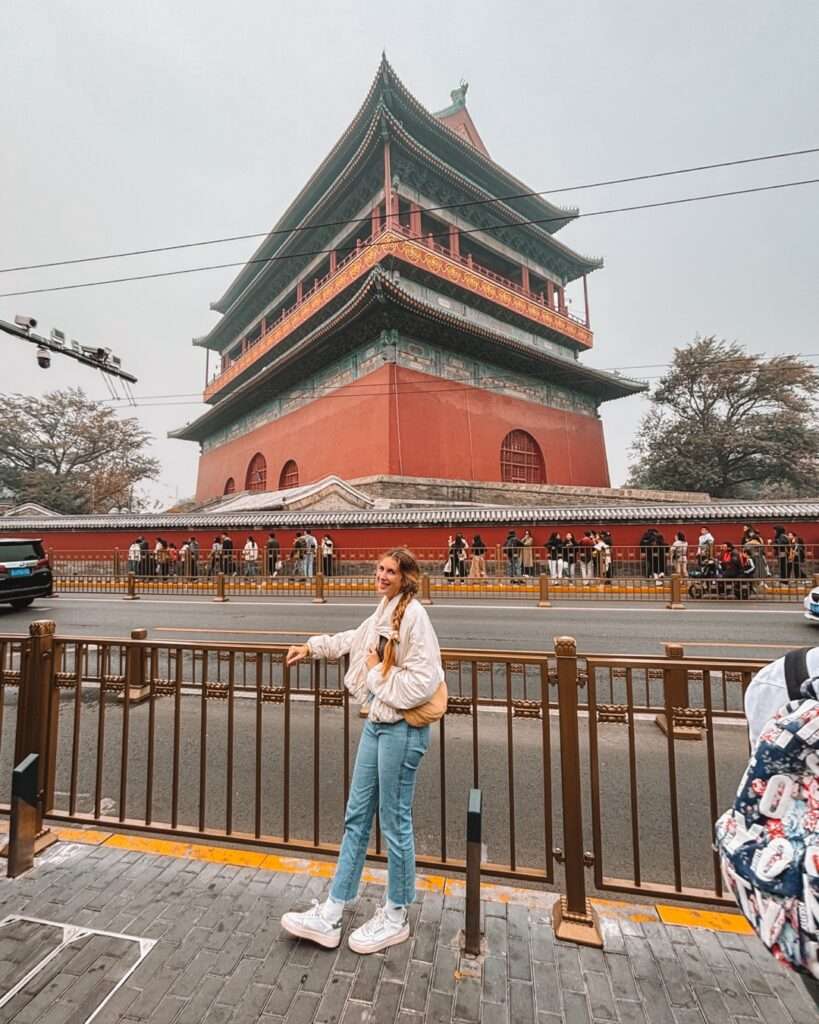
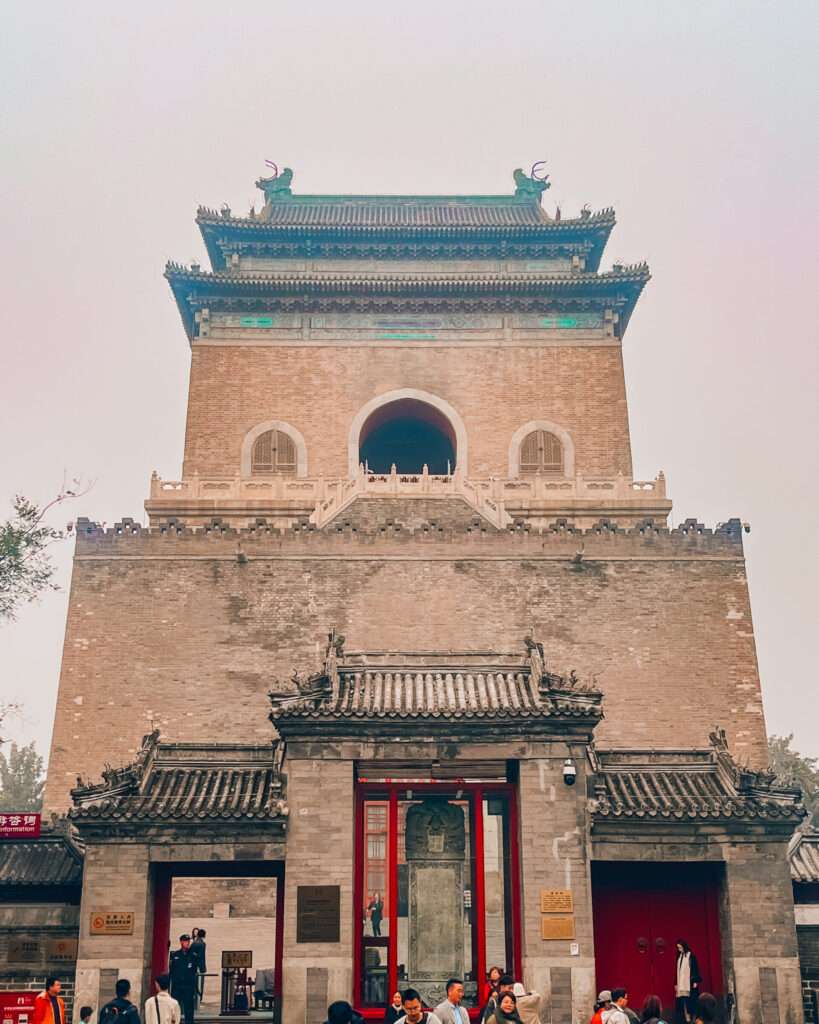
There is a square in the heart of Beijing, surrounded by hutongs and which is super interesting to see how the Beijingers live. And this is the Bell and Drum Tower Square which, as the name suggests, is surrounded by two buildings that contain a giant 600 year old bell and the Drum Tower, which was formerly used to mark the hours by a drum.
Both buildings can be visited for a fee (2 euros for the Bell Tower and around 3 euros for the Drum Tower) and tickets can be purchased on site at the ticket office.
One of the most popular streets and one of the Beijing must-sees. It is a super nice street with lots of stores and places to eat, located in the middle of one of the most famous hutong areas, Dashilan.
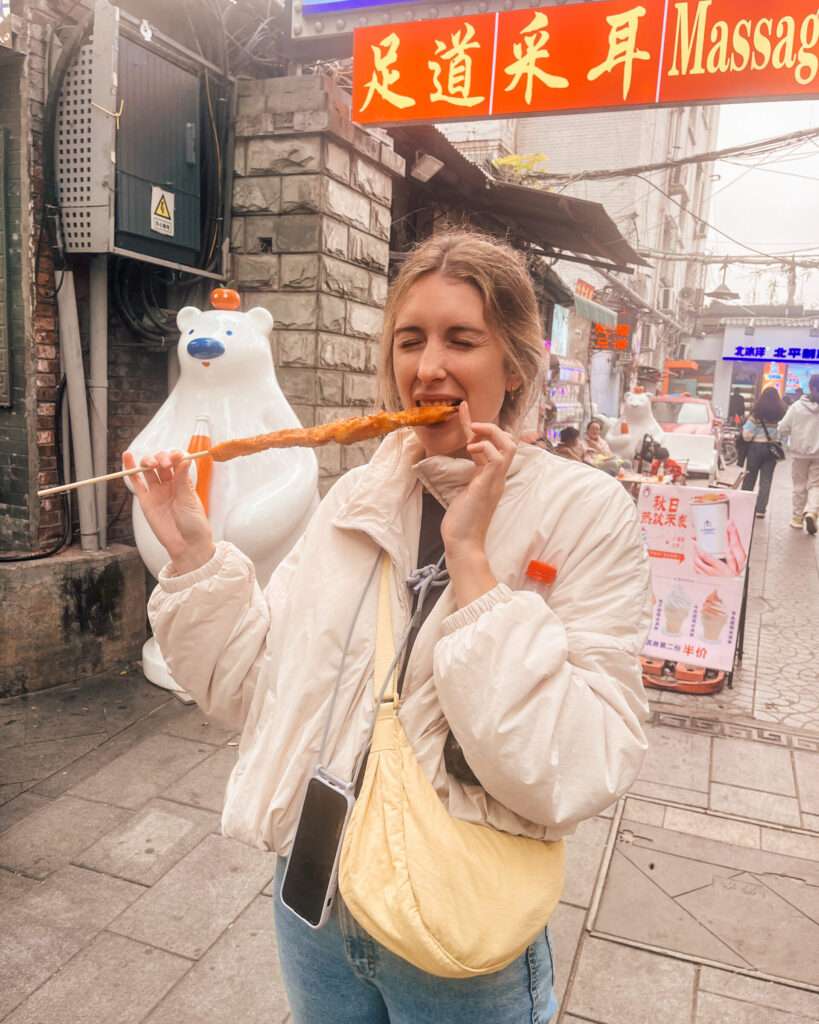
If you want to eat street food and see hutongs, it is a perfect place. We would recommend going to the eating area, it is very close to Tiananmen Square and the Forbidden City, so it could be a good way to combine both visits :).
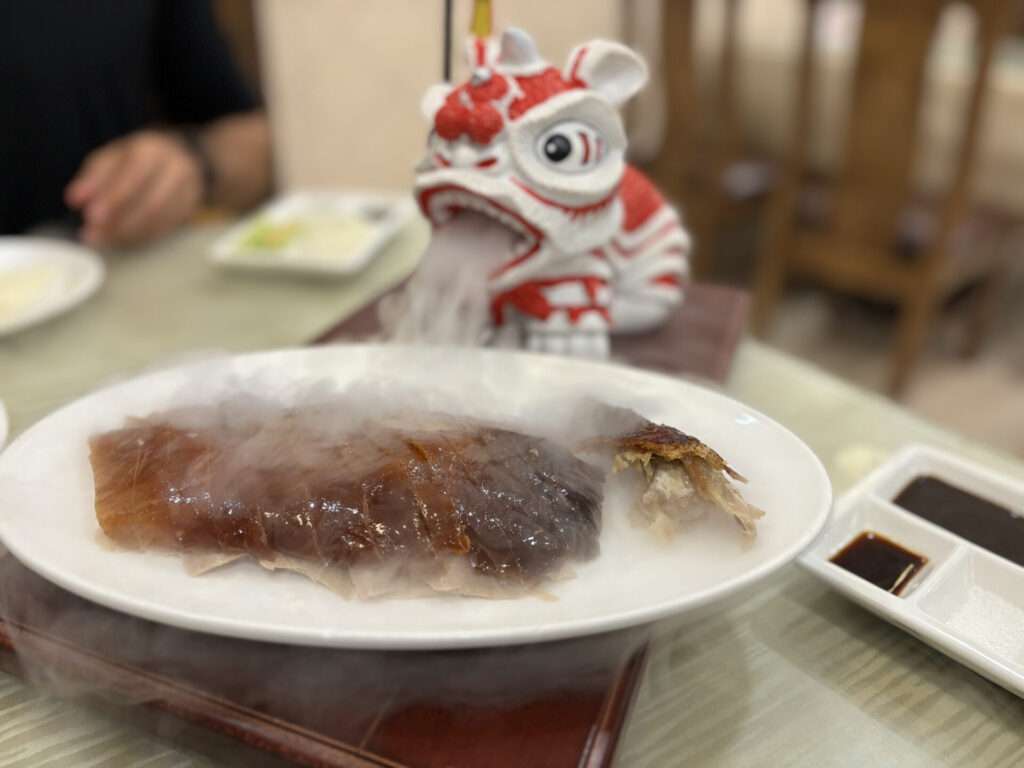
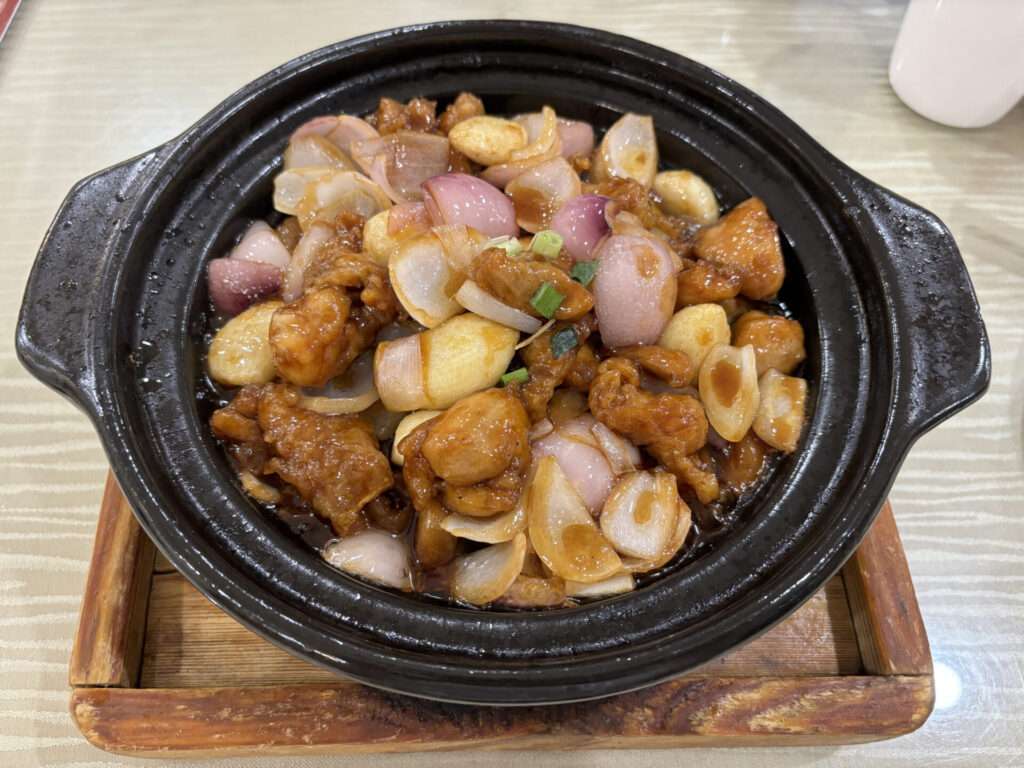
If you read us regularly, you will know that we love to eat. And we believe that a very important way to get to know a country is through its flavors. Therefore, we firmly believe that one of the Beijing must-dos is to try as much food as you can.
Obviously, it is impossible to try everything. We leave you our recommendations here:
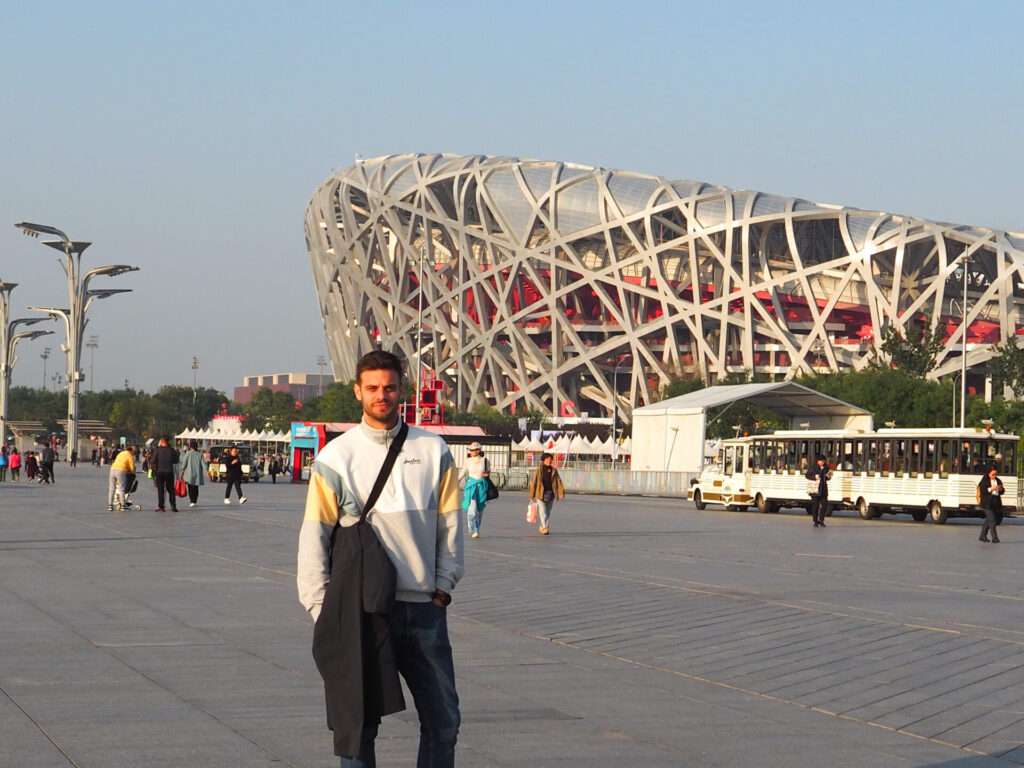
One of the most important events in Beijing in recent years was the 2008 Olympics. It is an event that transformed the city and left this area which is now one of the must-Beijing must-sees.
The highlight of this area is the spectacular stadium called the Bird’s Nest. We were totally surprised by this place, what an amazing construction.
To visit it, you have to get off at the Olympic Sports Center stop on line 8 and we recommend walking along its long avenue watching the Bird’s Nest and other places like the Water Cube, site of the swimming events, where Michael Phelps won 8 gold medals, in one of the great milestones in the history of sport.
You haven’t visited Beijing if you haven’t taken the subway. We have used the subway for all our trips and, to tell you the truth, it is a marvel.
From the system to get your ticket, which is in English and Chinese, to the pricing system, where you put origin and destination and it gives you the cost, we found it super simple and efficient.
It is curious to see the security at each entrance, with thorough checks of suitcases and metal detectors.
The ticket price almost never exceeds the euro price, so it is undoubtedly the best way to move and one of the essentials if you want to feel like a real Pekingese for a few days.
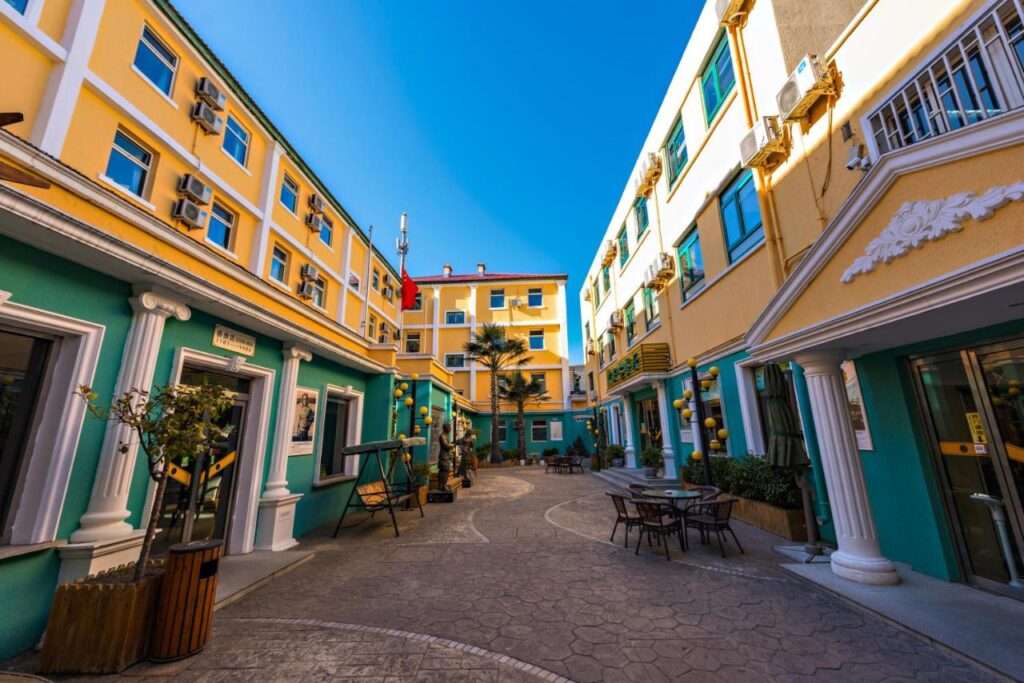
As we have already mentioned, Beijing is huge. We are going to recommend you the area and the hotel where we stayed, but soon we will bring you a complete post about where to stay in Beijing.
For us, the area where we stayed was ideal, as it was very close by subway to most of the important sites and the cost was not very high for Beijing. We stayed next to the Beijing Railway Station, in an area of hutongs.
The hotel was called Zhong An Hotel Beijing. It was fully equipped and had many details to be comfortable like hairdryer, shower slippers, water daily…. It also had a small gym and a restaurant that was delicious. The best thing is that it was two blocks from the subway stop Beijing Railway Station, which has super good connections to the main tourist sites in the city. The price we paid was 250 € for 4 nights.
Here is a map with some of the must-see places mentioned in this post.
Beijing is a city that has been put in our top, as it combines a very different culture, a super varied and curious cuisine, while rich and a mixture of tradition and modernity super striking. We hope this Beijing must-sees list will help you to enjoy the city as much as we did.
If you have any questions, do not hesitate to contact us, we will be happy to help you! 🙂
¿Te ha parecido útil este post?
¡Haz clic en una estrella para puntuarlo!
Promedio de puntuación 0 / 5. Recuento de votos: 0
Hasta ahora, ¡no hay votos!. Sé el primero en puntuar este contenido.
¡Siento que este contenido no te haya sido útil!
¡Déjame mejorar este contenido!
Dime, ¿cómo puedo mejorar este contenido?

Budget for traveling to China in 2025 Is it expensive to travel to China? How much do hotels cost? Can you eat cheap street…
Organizing a trip to China can be overwhelming. We bring you our 21 days in China and our opinion and details of the itinerary.

What better way of celebrating my 30th birthday than returning to Disneyland Paris after a twenty-year hiatus to feel like a kid again! Please…

After visiting New York for the first time, we can ensure that it is one of our favorite cities of the world. And that,…

Traveling to India is always a real challenge to all the travelers as there’s huge cultural differences with the occidental world. India has everything…

Lisbon is one of the perfect cities in Europe to see and enjoy in a weekend. Check this post to discover the must-sees of Lisbon.